
Shot Anatomy & Procedural Setup
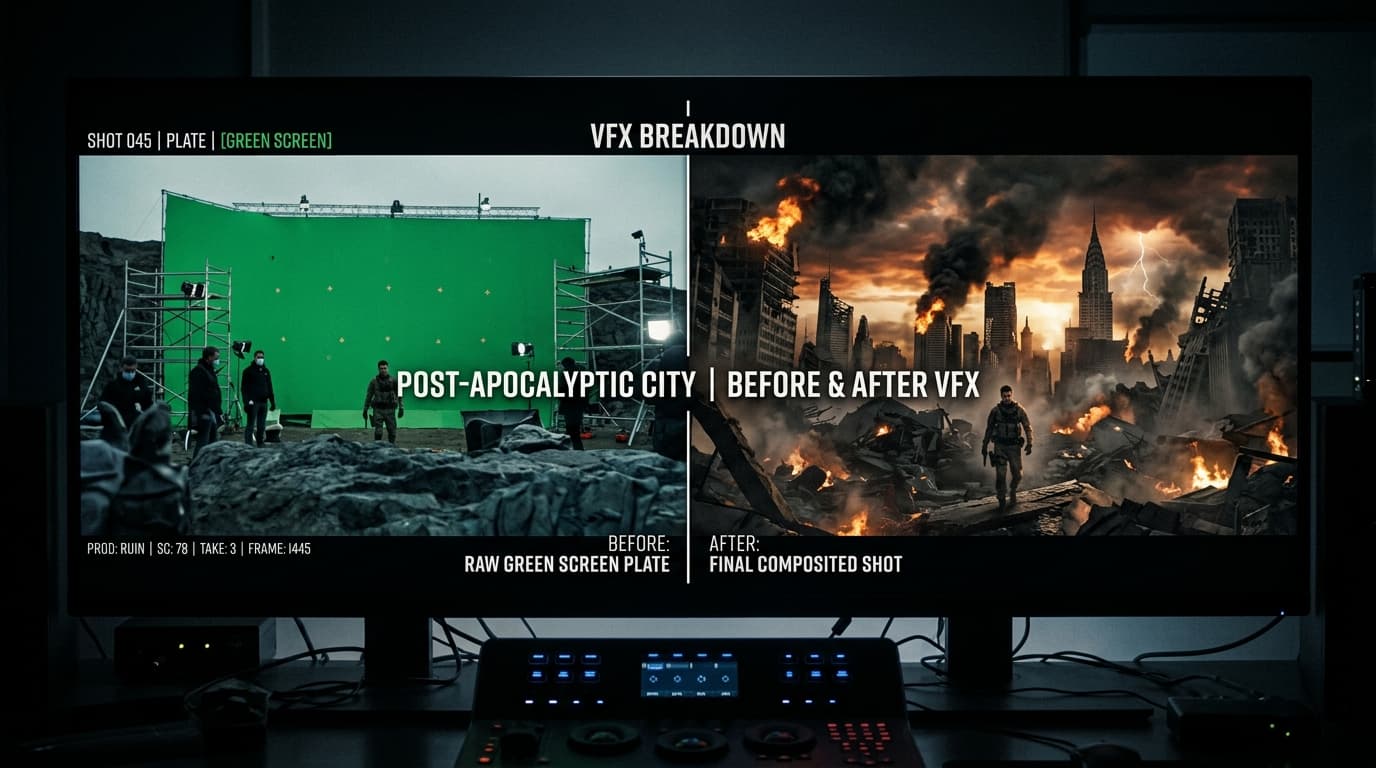
Engineering the visual effects for ILM Deploys OpenUSD 24.11 Solaris Pipeline Across Global Studio Facilities required an intricate fusion of procedural simulation, high-resolution asset lookdev, and multi-facility data interchange. Creating shots that hold up on 70mm IMAX screens demands meticulous physical realism down to the sub-millimeter level.
The technical development roadmap encompassed several critical phases:
- Procedural Asset Generation: Leveraging node-based geometry graphs in SideFX Houdini to generate vast, non-repeating environmental landscapes and destruction surfaces.
- Physical Dynamics Solvers: Custom finite element (FEM) and volumetric fluid solvers tuned to reproduce realistic shockwaves, dust dispersal, and atmospheric scattering.
- OpenUSD Composition Layers: Assembling shots via modular USD layers (geometry, materials, lights, and camera telemetry) to facilitate parallel artist handoffs.
Compositing & Deep Pixel Integration
In the compositing department, artists assembled final shots in Foundry Nuke utilizing multi-channel deep OpenEXR workflows:
```python
# Nuke Deep Data Pipeline Validation
node = nuke.toNode("DeepMerge_Beauty")
node["operation"].setValue("holdout")
node["tolerance"].setValue(0.001)
# Verifying bit-level deep sample coverage across volumetric boundaries
```
Deep compositing eliminates edge fringing and matting artifacts around complex volumetric elements like smoke and embers, allowing lighting adjustments to interact naturally with live-action actor foreground plates.
Pipeline Analysis by Raja Rathna Reddy
The execution on ILM Deploys OpenUSD 24.11 Solaris Pipeline Across Global Studio Facilities demonstrates why procedural and open-standard pipelines represent the future of tentpole visual effects. By standardizing asset definitions and automating telemetry verification, visual effects teams can deliver unprecedented visual spectacle within sustainable production timeframes.